


L'ECCESSO DEL DONO (José Tolentino de Mendonça) [in Italian and in English]
- P. Ezio Lorenzo Bono, CSF

- 7 giu
- Tempo di lettura: 7 min
Commento al Vangelo della
XI Domenica del Tempo Ordinario (Anno A) (14/06/2026)
Vangelo: Mc 4,26-34
I.
Si dice che i giovani d'oggi siano di poche parole. Non nel senso che parlano poco, ma perché conoscono meno parole rispetto alle generazioni precedenti. Il loro comunicare passa soprattutto attraverso immagini, abbreviazioni, emoji e linguaggi in codice. E così il vocabolario si restringe. Ma quando il linguaggio diventa povero, anche il pensiero rischia di impoverirsi.
Una delle cause di questa povertà lessicale è la mancanza di educazione alla lettura. Dove ci sono genitori che leggono, generalmente nascono figli lettori; dove la lettura non trova spazio, difficilmente attecchisce nelle nuove generazioni. Molti giovani non leggono perché considerano la lettura una fatica e preferiscono attività più immediate e divertenti.
Lo stesso vale per la musica, il teatro, l'arte. Tutto ciò che richiede attenzione, ascolto e pazienza sembra suscitare meno interesse. I gusti si formano attraverso l'educazione: se non si viene introdotti alla bellezza, difficilmente la si cercherà da adulti.
Con le dovute differenze, qualcosa di simile accade anche nella vita religiosa. Dio appare spesso lontano, estraneo, poco interessante. Come cantano i Maneskin ne “Il dono della vita”: «E pure Dio era girato di spalle mentre gli dicevo che stavo cadendo».
Se ci preoccupa che molti giovani non leggano, non frequentino teatri o musei, dovremmo preoccuparci ancora di più del loro disinteresse per la fede. Perché quando si spengono la musica assordante, l'euforia del divertimento o dello sport, allora si affaccia quello che Galimberti chiama l'“ospite inquietante”: il non-senso.
II.
Questo disorientamento suscita la stessa “compassione” di cui parla il Vangelo di oggi. Gesù, «vedendo le folle, ne sentì compassione, perché erano stanche e sfinite come pecore che non hanno pastore».
Mosso da questa compassione, sceglie i suoi apostoli e li invia a guarire, liberare e annunciare la speranza. «Il Regno di Dio è vicino», cioè: Dio è vicino.
A differenza di duemila anni fa, oggi il problema non è la mancanza di pastori, ma il loro proliferare: Leader, guru, influencer, predicatori e cattivi maestri affollano il mondo reale e quello digitale. Le strade da seguire sono troppe e questo genera smarrimento, soprattutto nei giovani.
Proprio in questi giorni Papa Leone XIV, incontrando centinaia di migliaia di giovani a Madrid, li ha invitati a non avere paura di ascoltare la voce di Dio. Siamo immersi in un continuo bombardamento di messaggi, consigli, opinioni e slogan. La vera sfida è imparare a distinguere, tra mille voci che gridano, quella Voce che ama.
La nostra voce di apostoli del terzo millennio non deve confondersi con quella dei tanti venditori di illusioni. Il problema della trasmissione della fede oggi è soprattutto un problema di comunicazione: trovare la frequenza giusta per entrare in sintonia con il cuore delle nuove generazioni.
I giovani si appassionano quando percepiscono vibrazioni autentiche. Forse siamo noi che non sempre riusciamo a trasmettere la passione che abita la nostra vita. Se i libri che abbiamo letto ci hanno cambiato, se la musica ci ha aperto il cuore, se l'arte ci ha resi più umani, dovremmo comunicarlo per contagio.
Anch'io penso con gratitudine ai professori che mi hanno fatto amare i classici, l'arte e la musica. Nessuno di loro cercava di convincerci: erano semplicemente innamorati di ciò che insegnavano.
A maggior ragione vale per la fede. Se Cristo è davvero la ragione che ci fa alzare ogni mattina e riempie di senso la nostra esistenza, questa gioia trasparirà dai nostri occhi.
Dobbiamo avere la stessa compassione di Gesù: imparare a sentire ciò che sentono i giovani, per trovare la frequenza giusta sulla quale incontrarli. Non dobbiamo mai rinunciare a proporre loro Dio, né rassegnarci a lasciarli in balia degli influencer di turno.
III.
Il Vangelo termina con queste parole: «Gratuitamente avete ricevuto, gratuitamente date».
Vorrei concludere con una preghiera toccante del nostro Prefetto-poeta del Dicastero per la Cultura e l'Educazione, il Cardinale José Tolentino de Mendonça:
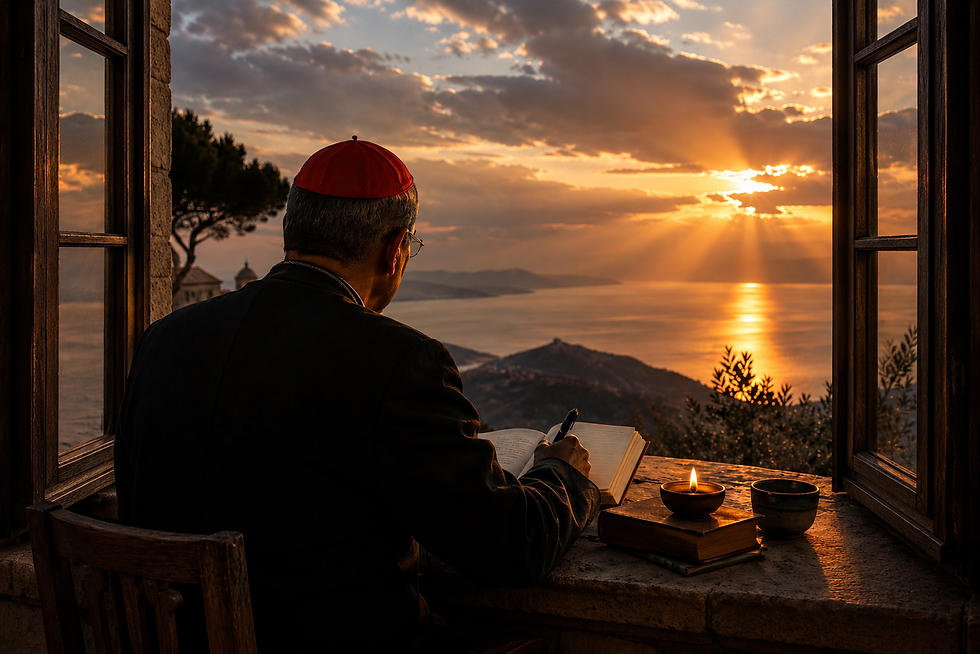
«Ti chiediamo, Signore, l'audacia di vivere il gratuito: che sappiamo oggi aprire una finestra non appena per ispezionare il duro suolo che già conosciamo, ma perché i nostri occhi si perdano nella vastità dei cieli; che dedichiamo oggi alla vita attorno a noi uno sguardo ampio, senza giudizi precipitosi, senza l'ombra dei risentimenti che riducono l'orizzonte e ci assediano; e che sappiamo interpretare la sovrabbondanza del reale come una chiamata a sperimentare la prodigalità dell'amore che condividi con le tue creature. Perché è l'eccesso del dono, e non l'egoistica penuria, che a ogni istante rispecchia te».
E dopo aver ascoltato queste splendide parole, mi viene da rispondere ai Maneskin che cantano: «E pure Dio era girato di spalle mentre gli dicevo che stavo cadendo». Ma con chi avete parlato? Siete sicuri di esservi rivolti al Dio giusto?
____________
Per i testi delle mie riflessioni e per accedere direttamente, tramite le icone, a tutti i miei canali social, visita la mia webpage: eziobono.com
[In English]
THE EXCESS OF THE GIFT (José Tolentino de Mendonça)
Reflection on the Gospel of the
11th Sunday in Ordinary Time (Year A) – June 14, 2026
Gospel: Mark 4:26–34
I.
People often say that today’s young people are people of few words. Not because they speak less, but because they know fewer words than previous generations. Their communication relies mainly on images, abbreviations, emojis, and coded language. As a result, vocabulary shrinks. And when language becomes impoverished, thought itself risks becoming impoverished as well.
One of the causes of this lexical poverty is the lack of education in reading. Where parents read, children generally become readers as well; where reading is absent, it rarely takes root in the next generation. Many young people do not read because they see reading as hard work and prefer activities that are more immediate and entertaining.
The same is true of music, theater, and art. Anything that requires attention, listening, and patience seems to attract less interest. Our tastes are shaped through education: if we are never introduced to beauty, we are unlikely to seek it as adults.
With the necessary distinctions, something similar happens in religious life. God often appears distant, irrelevant, and uninteresting. As the Italian band Måneskin sings in The Gift of Life: “Even God had turned His back on me while I was telling Him that I was falling.”
If we are concerned that many young people do not read, do not go to theaters, or do not visit museums, we should be even more concerned about their lack of interest in faith. Because when the loud music fades, when the excitement of entertainment or sports subsides, what the philosopher Umberto Galimberti calls “the unsettling guest” begins to appear: meaninglessness.
II.
This confusion awakens the same “compassion” spoken of in today’s Gospel. Jesus, “seeing the crowds, was moved with compassion for them, because they were troubled and abandoned, like sheep without a shepherd.”
Moved by this compassion, He chooses His apostles and sends them out to heal, to liberate, and to proclaim hope. “The Kingdom of God is at hand,” which means: God is near.
Unlike two thousand years ago, today the problem is not the lack of shepherds but their abundance. Leaders, gurus, influencers, preachers, and false teachers crowd both the real world and the digital world. There are too many paths to follow, and this creates confusion, especially among young people.
Just a few days ago, Pope Leo XIV, speaking to hundreds of thousands of young people in Madrid, encouraged them not to be afraid to listen to the voice of God. We live in a constant bombardment of messages, advice, opinions, and slogans. The real challenge is learning how to recognize, among a thousand voices shouting for our attention, the one Voice that truly loves us.
Our voice as apostles of the third millennium must not be confused with that of the many merchants of illusion. The greatest challenge in passing on the faith today is, above all, a challenge of communication: finding the right frequency to resonate with the hearts of the younger generations.
Young people become passionate when they perceive something authentic. Perhaps we are not always able to communicate the passion that fills our own lives. If the books we have read have changed us, if music has opened our hearts, if art has made us more human, then we should share that experience through the power of contagion.
I, too, think with gratitude of the teachers who taught me to love literature, art, and music. None of them tried to persuade us; they were simply in love with what they taught.
How much more true this is of faith. If Christ is truly the reason we rise each morning and the One who fills our lives with meaning, then that joy will shine through our eyes.
We must have the same compassion as Jesus: learning to feel what young people feel, so that we may find the right frequency on which to meet them. We must never stop proposing God to them, nor resign ourselves to leaving them at the mercy of whatever influencer happens to be trending.
III.
Today’s Gospel concludes with these words: “Freely you have received; freely give.”
I would like to conclude with a moving prayer by our Prefect-poet of the Dicastery for Culture and Education, Cardinal José Tolentino de Mendonça:
“We ask You, Lord, for the courage to live gratuitously: that today we may open a window not merely to inspect the hard ground we already know, but so that our eyes may lose themselves in the vastness of the heavens; that today we may look upon the life around us with a broad gaze, free from hasty judgments and from the shadows of resentment that narrow our horizons and besiege us; and that we may learn to interpret the abundance of reality as a call to experience the prodigality of the love You share with all Your creatures. For it is the excess of the gift, and not selfish scarcity, that reflects You at every moment”.
And after hearing these beautiful words, I feel like responding to Måneskin, who sing: “Even God had turned His back on me while I was telling Him that I was falling.”
But who were you talking to? Are you sure you were speaking to the right God?
_________
For the text of my reflections and to directly access all my social media channels via the icons, visit my website: eziobono.com
![POCO CON DIO È MOLTO [in Italiano, English, Português]](https://static.wixstatic.com/media/d8cfe4_143f85b5d3f845928d22f781b81c3a4e~mv2.png/v1/fill/w_980,h_653,al_c,q_90,usm_0.66_1.00_0.01,enc_avif,quality_auto/d8cfe4_143f85b5d3f845928d22f781b81c3a4e~mv2.png)
![IL TESORO NASCOSTO (Storage Wars) [In Italiano, English, Português]](https://static.wixstatic.com/media/d8cfe4_828c905e08384987af348fed4c87a459~mv2.jpeg/v1/fill/w_332,h_472,al_c,q_80,enc_avif,quality_auto/d8cfe4_828c905e08384987af348fed4c87a459~mv2.jpeg)
![OMBRA E LUCE (Caravaggio) [In Italiano, in English, em Português]](https://static.wixstatic.com/media/d8cfe4_09f2ad4f343549c48651e95ac5677f9b~mv2.jpeg/v1/fill/w_494,h_467,al_c,q_80,enc_avif,quality_auto/d8cfe4_09f2ad4f343549c48651e95ac5677f9b~mv2.jpeg)
Commenti